Spots on the face look similar. They are not the same thing.
Hormonal pigmentation, sun spots, and a mark left after a pimple are three different conditions — with different behavior, and with a different response to treatment. A treatment that suits one can be wrong for another.
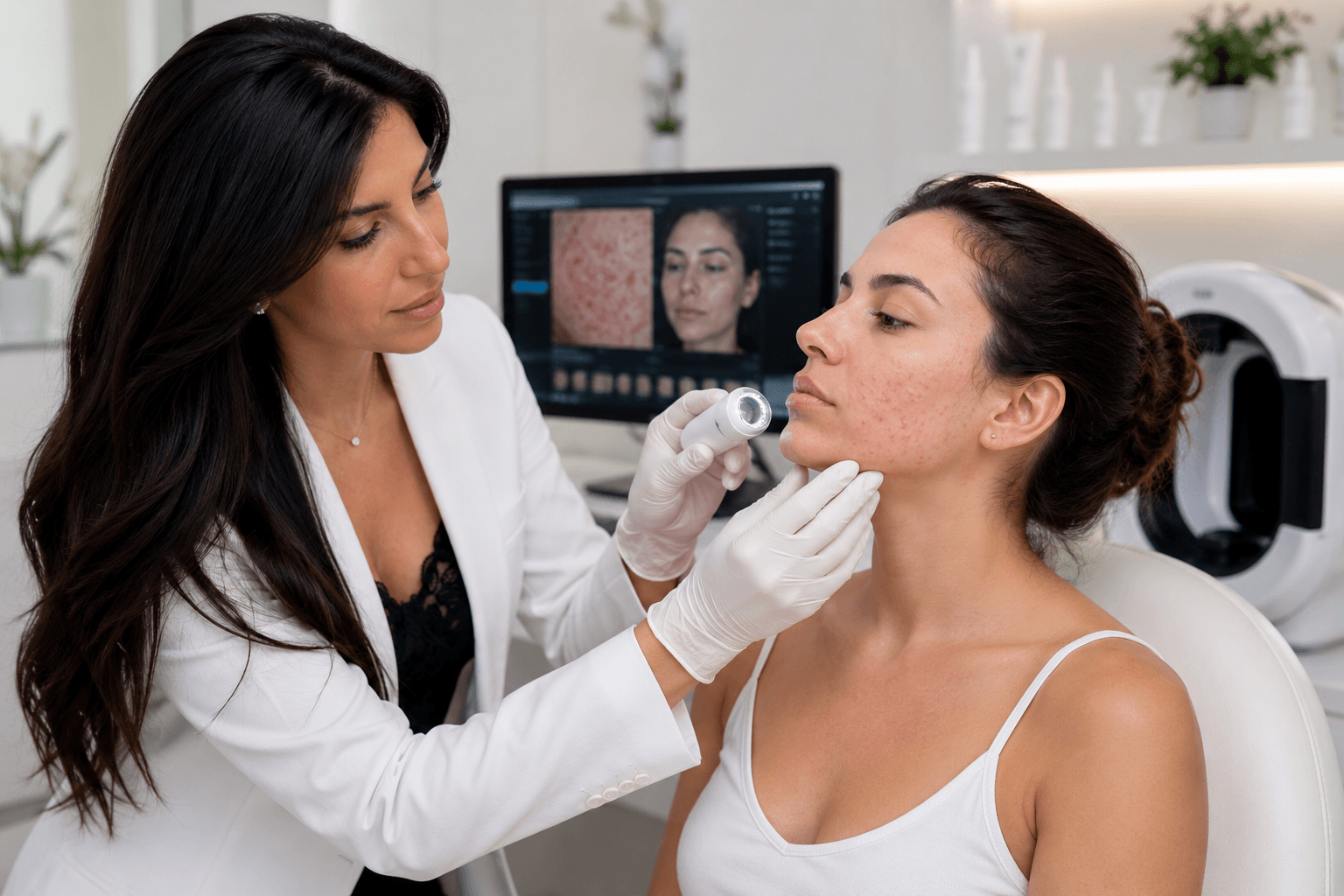
That is why at Maayan Cosmetics we do not start with treatment. We start with a skin diagnosis, and only after that is the plan built.
The types of pigmentation we diagnose
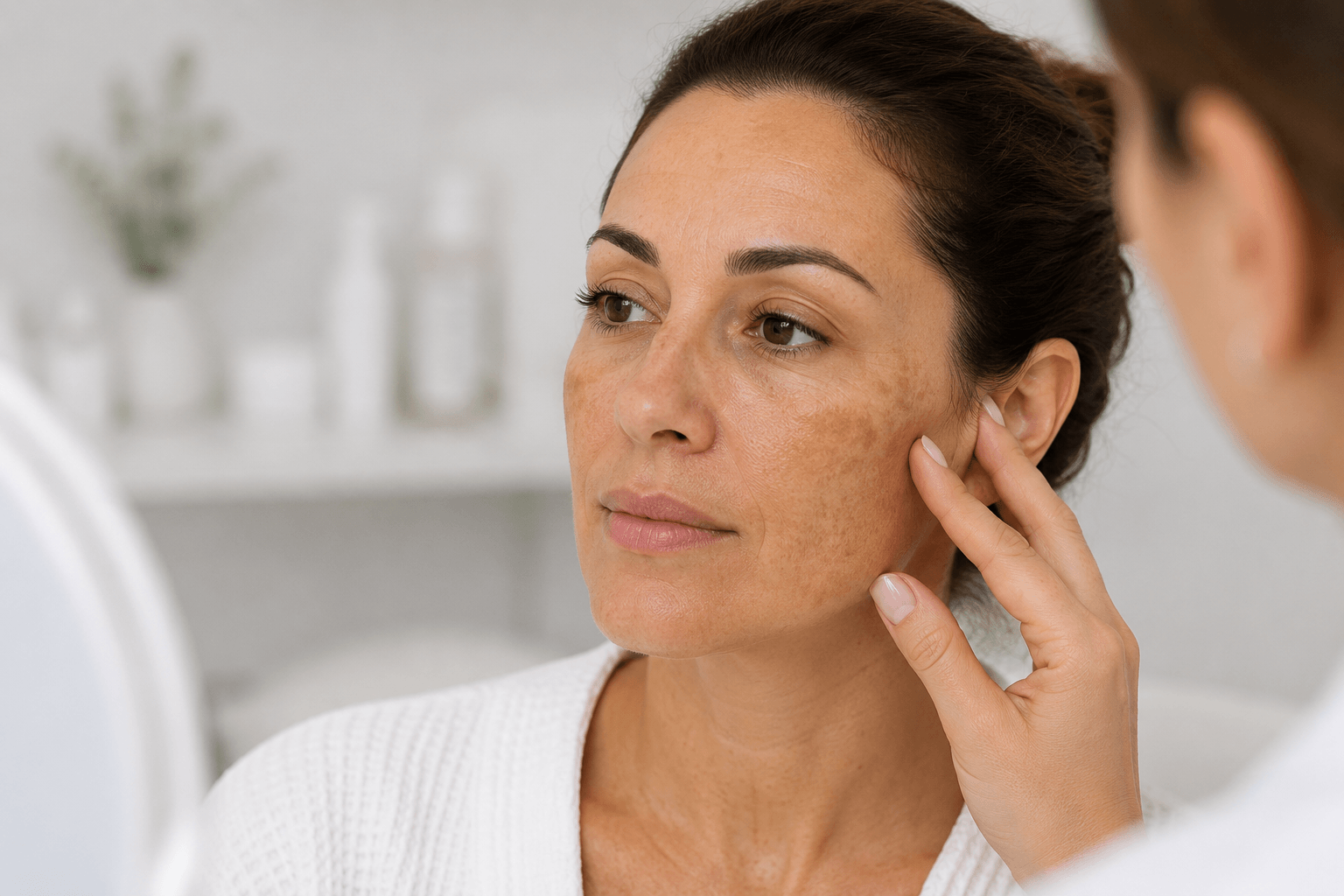
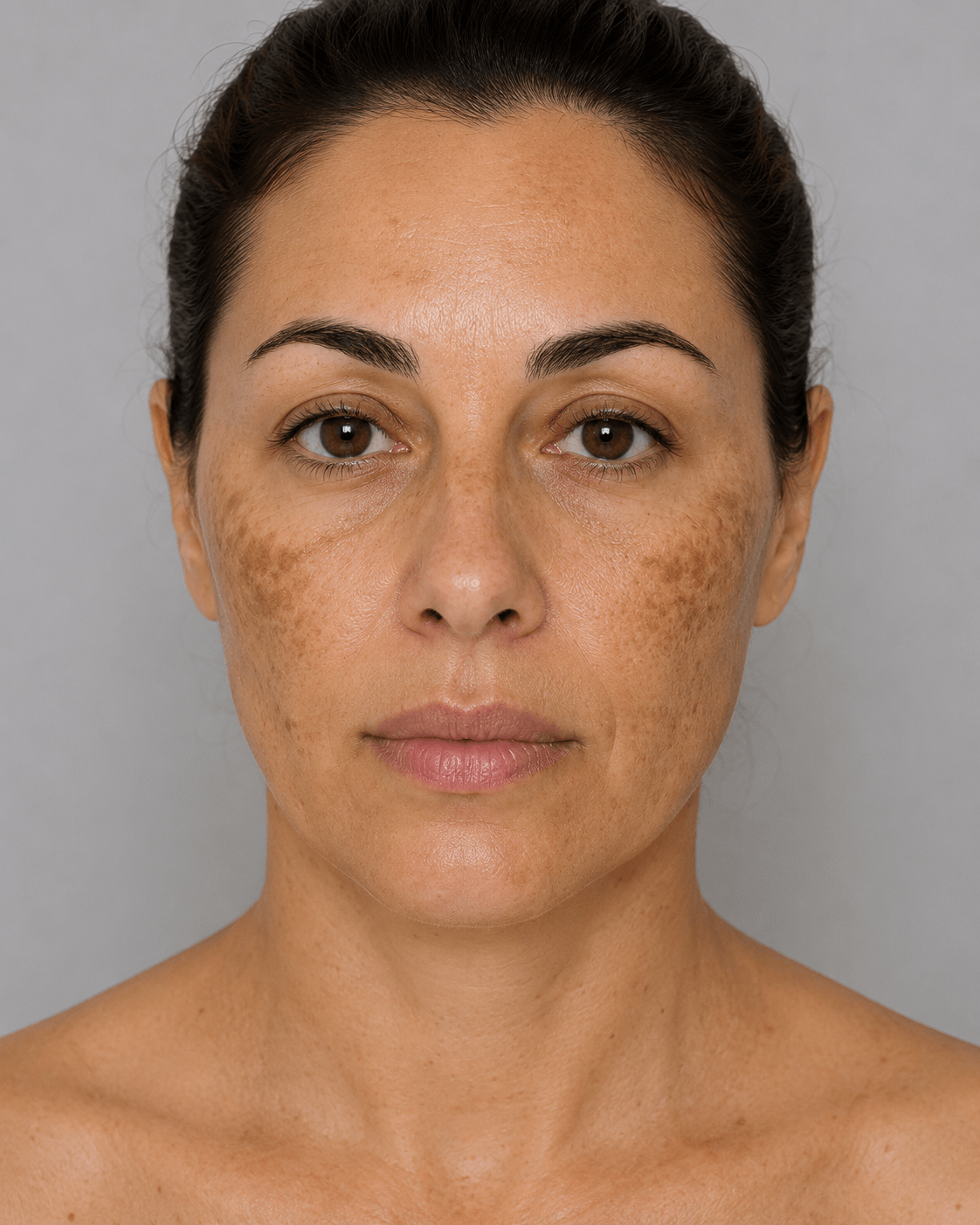
- Hormonal (melasma) — spots linked to hormonal changes: pregnancy, the pill, hormonal treatments.
- Solar — sun spots that have accumulated over years of exposure.
- Post-inflammatory — pigment left where there was a wound, pimple, or inflammation.
- Freckles
- Hyperpigmentation — increased melanin production in a particular area.
Identification is done at in-clinic diagnosis, not from a photo and not from a description.
When we stop and refer to a dermatologist
We do not perform pigmentation treatment before an accurate skin diagnosis. And when an unusual finding comes up at diagnosis — we stop and refer to a dermatologist.
Treatment starts only after the physician has confirmed that the finding is in order.
Why this is not excessive caution
On facial skin with accumulated sun damage, there are findings that look almost identical to an ordinary sun spot and in practice require medical examination. This is well documented in the medical literature: there are flat lesions on the face and neck — more common at older ages — that clinically resemble benign sun spots, and therefore can remain undiagnosed for years.
A cosmetic treatment that lightens such a spot does not resolve it. It only makes it harder to identify later.
So the decision with us is simple: in doubt — we do not treat. We send for examination.
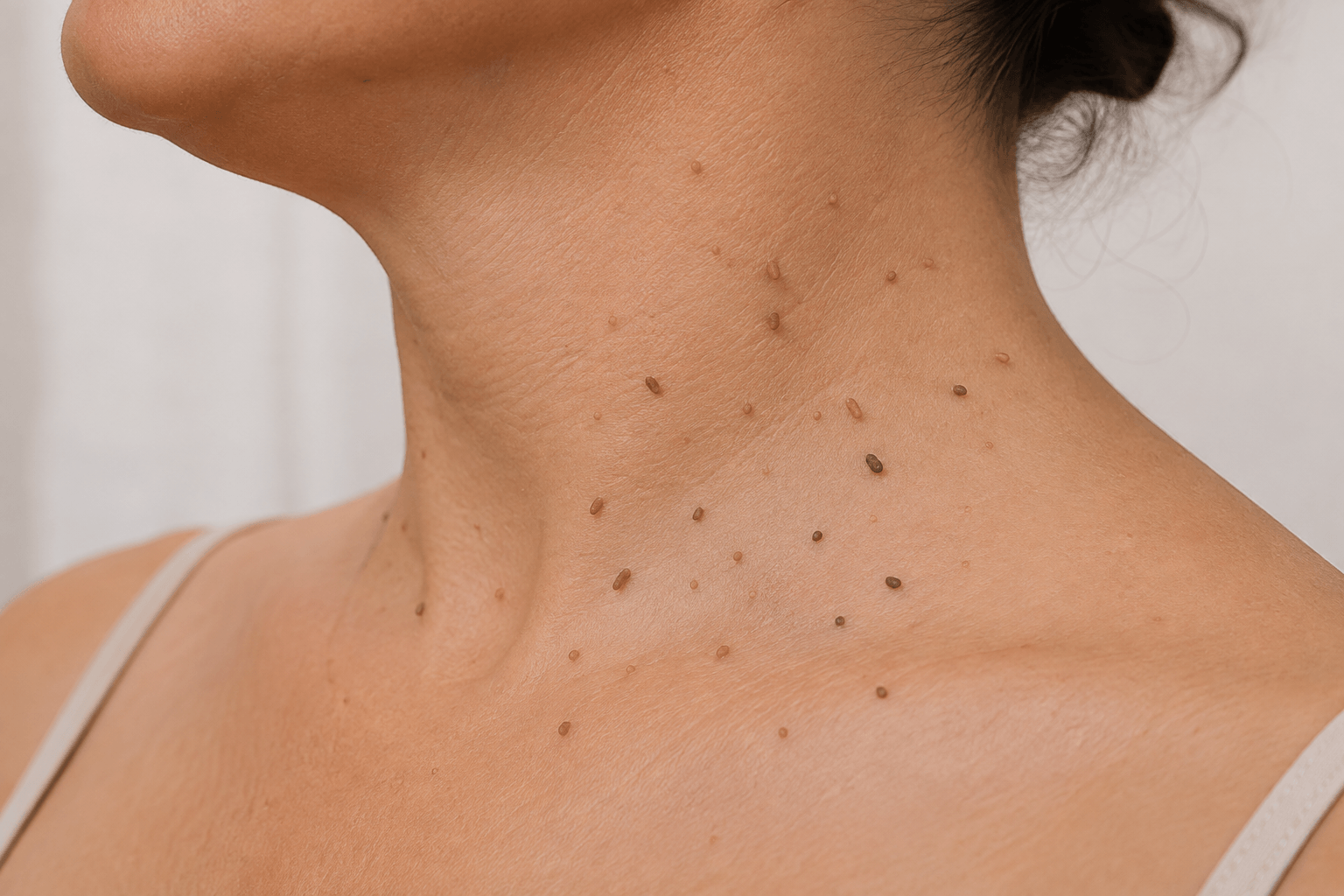
This is the same policy we follow for skin tag removal.
Melasma — the type you must know separately
This is the part that is most important for you to know, even if you ultimately choose to treat somewhere else.
Most types of pigmentation are pigment that has remained in the skin. The cells that produced it are no longer especially active, so it can be broken down.
Melasma works differently. It comes from pigment cells in a state of ongoing over-activity — ready to "fire" again the moment something triggers them. Sun, heat, hormones, and inflammation are exactly those triggers.
And from this come two conclusions
1. Aggressive treatment can worsen it. It is well documented in the medical literature that light- and heat-based treatments — especially IPL — can cause melasma to flare instead of improve. Mayo Clinic explicitly advises against using IPL on melasma. The phenomenon is familiar: initial lightening, followed by worsening weeks later.
With us, melasma is not treated with Lumecca and is not treated with photo rejuvenation. The approach to melasma is conservative, and the protocol is set at diagnosis according to the depth of the pigment and the condition of the skin.
2. Melasma is managed — it does not disappear.
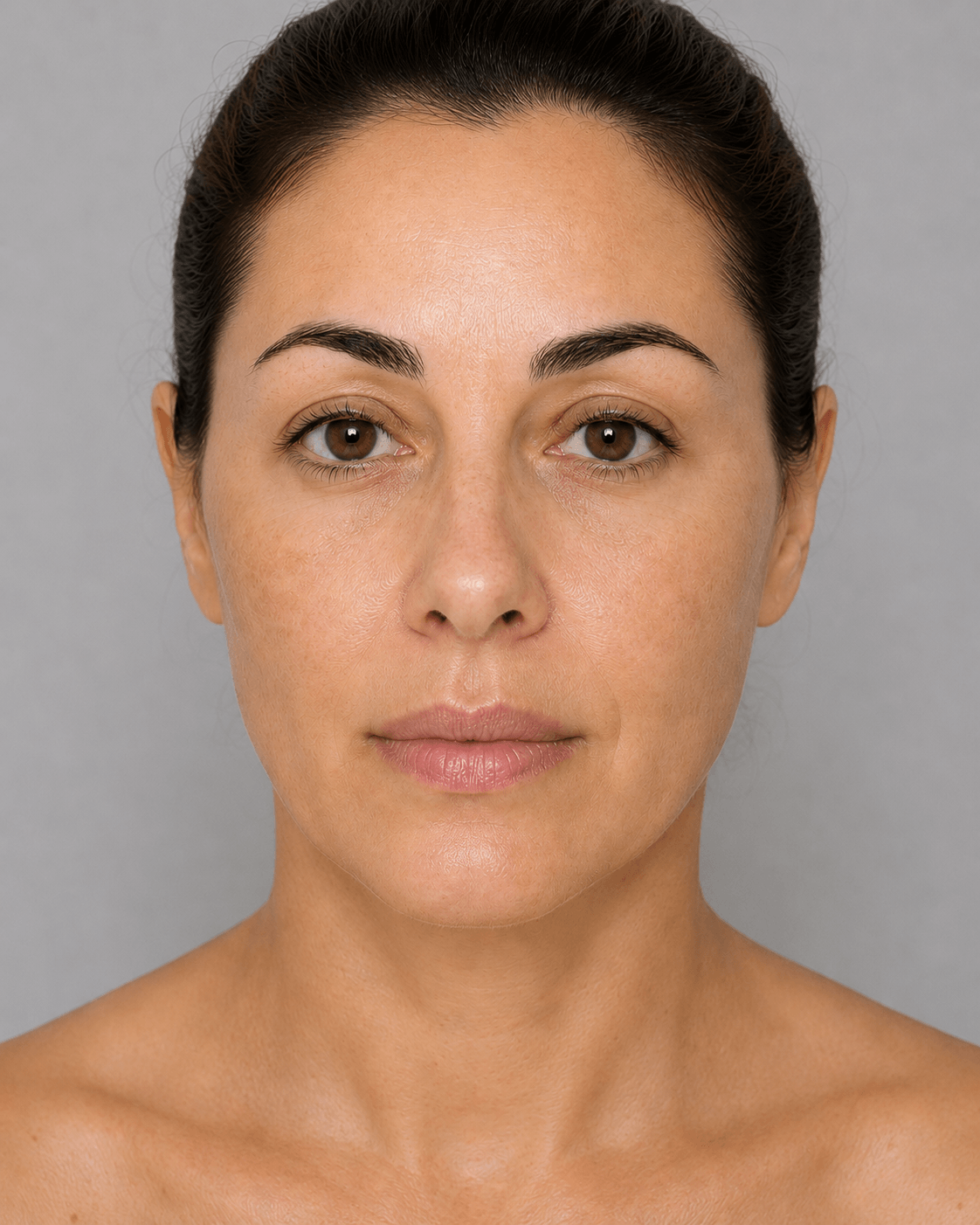
We will say this directly, because it is not what most websites write: there is pigmentation that cannot be treated completely, and melasma is that kind. You can significantly improve the appearance and you can maintain the condition over time — but a promise of complete removal of melasma is not a promise that can be kept.
Melasma in pregnancy and after birth
This is a very common situation, and it requires separate attention.
Melasma often appears or worsens in pregnancy and in periods of hormonal change. At this stage we do not start clinical treatment.
- Sun protection is the foundation, and it is relevant and safe at every stage.
- Any product in pregnancy or while breastfeeding — check with your physician. There are ingredients commonly used in pigmentation treatment that are not intended for use in these periods, and we do not give product recommendations remotely.
- Clinical treatment with us starts two months after breastfeeding ends.
That means if you are pregnant or breastfeeding — it is still worth coming for diagnosis and planning, even if the treatment itself starts later.
How the plan works
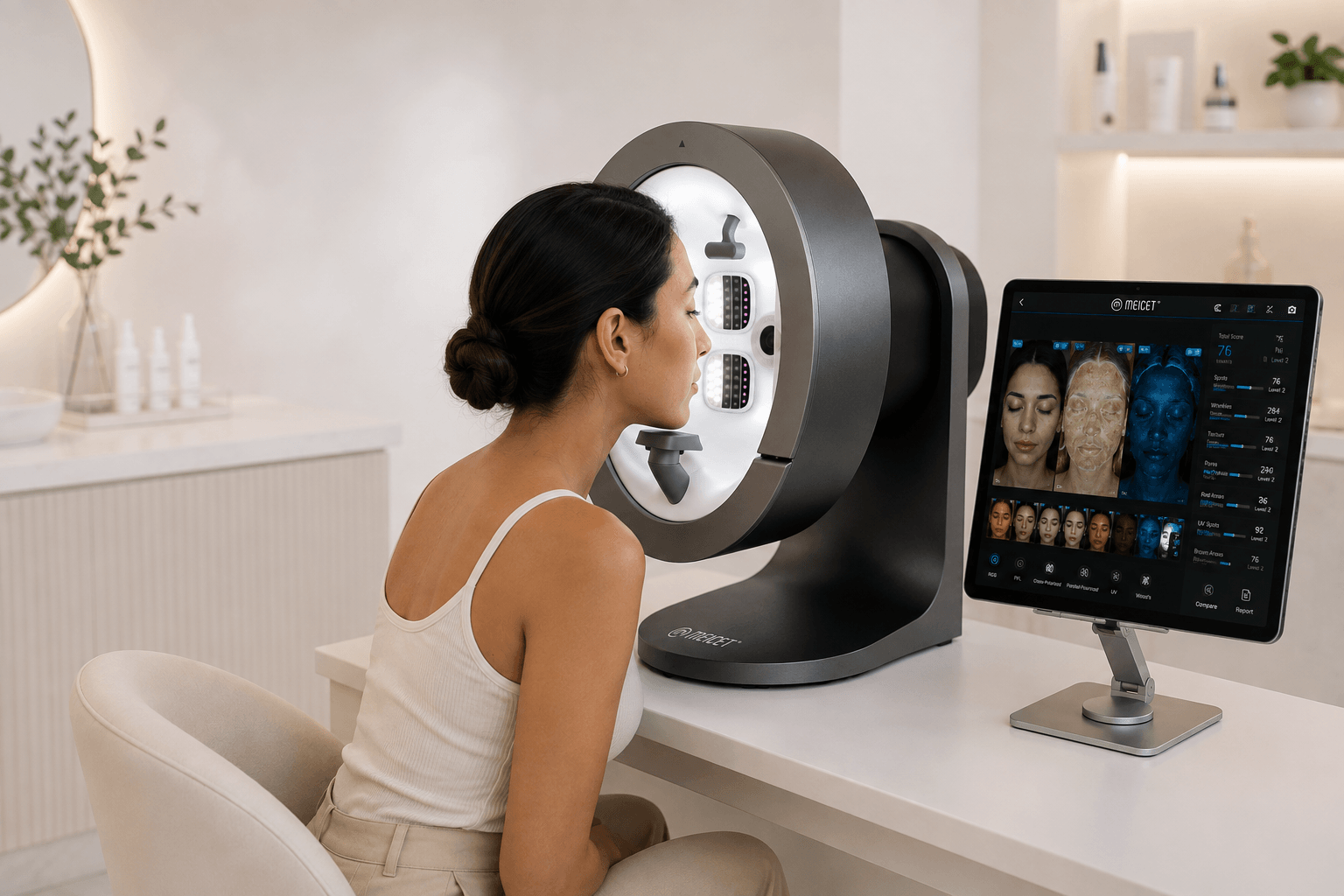
- [Skin diagnosis](/blog/skin-diagnosis). Using the MEICET PRO-A system, up to 30 minutes, with a digital report.
- Determining the type of pigmentation. This is the stage that determines everything that follows. If an unusual finding comes up — we stop and refer to a dermatologist before continuing.
- Building a plan according to the type, the condition of the skin, and the affected area of the face.
- A tailored home skincare routine — an essential part of the plan, not an add-on.
- Follow-up. For those who purchase a series, a repeat scan is done at every session, so we can see if the plan is working and adjust along the way.
The protocols were developed by Maayan Meir. Diagnosis is performed by Maayan or Elinor Meir, and treatments by the therapist team according to the stage.
Why home care is not optional
With pigmentation, what happens at home between sessions affects at least as much as what happens at the clinic.
The maintenance routine built for you includes five functional components:
- A tailored face cleanser
- An active cream
- A melanin-suppressing product
- A moisturizer
- A sunscreen
The match is derived from the findings at diagnosis. The products are from the clinic's Miloré brand, and you can come for diagnosis without purchasing anything.
Sun protection — the only thing that determines whether the result lasts
There is no gentle way to say this: a pigmentation plan without consistent sun protection is a waste of money.
Sun is the main aggravating factor in almost every type of pigmentation, and with melasma heat as well. This is true in winter, on a cloudy day, and when you do not feel you are burning.
It is also the only part of the process that is entirely in your hands.
How pricing is determined
There is no fixed price list for a pigmentation plan. The price is derived from the type of pigmentation, the condition of the skin, the extent of the treated area, and the plan set after diagnosis.
The diagnosis costs 150 ₪, and is fully credited toward the plan if you choose to proceed. Cancellation up to 24 hours before the appointment — a full refund.
Frequently asked questions
How do you know what type of pigmentation I have?
At in-clinic diagnosis. Not from a photo and not from a description — we do not determine type remotely.
Can pigmentation be removed completely?
It depends on the type. Some types respond very well. Melasma is a type that cannot be treated completely — it is managed, and the aim of the plan is improvement and maintaining the condition.
I had IPL or laser and the spots got worse. Why?
This is a familiar situation, especially with melasma. Light- and heat-based treatments can activate pigment cells instead of calming them. If this happened to you — it is worth starting with a diagnosis that determines exactly what you have before continuing.
I have melasma. Do you do Lumecca for me?
No. Melasma is not treated with us with Lumecca and is not treated with photo rejuvenation.
I am pregnant — can I start?
Clinical treatment with us starts two months after breastfeeding ends. Until then the foundation is sun protection, and any product — check with your physician.
What happens if something unusual is found at diagnosis?
We stop and refer you to a dermatologist. Pigmentation treatment starts only after the physician has confirmed that the finding is in order.
Why does pigmentation come back?
With melasma, pigment cells remain in a state ready to flare. Exposure to sun, heat, or a hormonal change can bring it back. That is why the maintenance stage is not optional.
Do I have to buy products?
No. You can come for diagnosis only. But with pigmentation, a home routine is an essential part of the result — and without it it is hard to maintain.
Can I do a pigmentation plan in summer?
Yes, subject to consistent sun protection. This is true in every season — simply more demanding in summer.
How many treatments will I need?
Determined after diagnosis, according to the type and the condition of the skin. It is not right to give a number before we have seen the skin.
Want to know what type of pigmentation you have before you commit to treatment? Send a message to the team on WhatsApp and we will get back to you to schedule. For details about the treatment at the clinic, see also the pigmentation treatment page.